
Professional tree removal across Buckinghamshire, Hertfordshire, Bedfordshire, Northamptonshire and Oxfordshire, when it’s needed, what it involves, and what it should cost
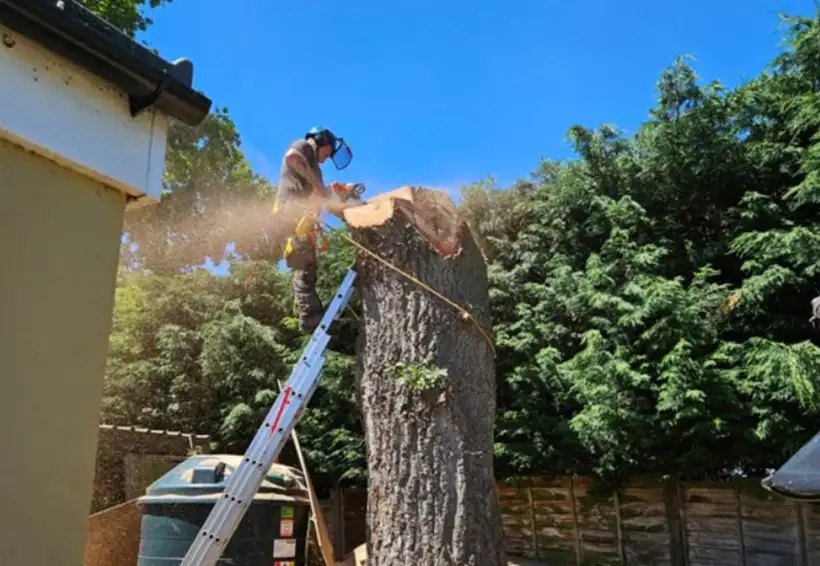
A few winters ago, I was called to a job where a homeowner had picked the cheapest quote, because, in their words, “it’s only a tree”. The crew turned up without the right kit for the access, rushed the dismantle, and a heavy limb swung into a fence and a shed roof. The “saving” vanished, then the clean-up took longer, and the homeowner was left trying to work out what was insured, what wasn’t, and who was responsible. Tree removal is one of those jobs where the risk sits quietly in the background until something goes wrong. The price is never just about cutting wood, it’s about controlling risk, protecting property, and finishing the job properly.
When tree removal is the right call
I’m not in the business of removing trees for fun. In many cases, a well-judged reduction, selective pruning, or crown management is a better outcome. Removal becomes the right call when the tree can’t be made safe or viable at a sensible cost.
Common situations where removal may be appropriate include:
- Dead or dying trees where structural strength is declining, and failure is a risk
- Dangerous defects such as major splits, severe decay, root plate movement, or repeated limb failures
- Structural instability where a tree is leaning with active root disturbance, or has poor anchorage
- Disease considerations, especially where decline is advanced or the tree is becoming unpredictable
- Root damage from construction, trenching, or vehicle compaction, which can undermine stability over time
- Post-storm damage, particularly where the canopy is torn, the trunk is fractured, or the tree is hung up over a target area
You’ll also see trees blamed for subsidence. Sometimes trees are a factor, sometimes they’re not. If subsidence is a concern, it’s usually wise to speak to your insurer and get proper assessment rather than assuming removal is the answer.
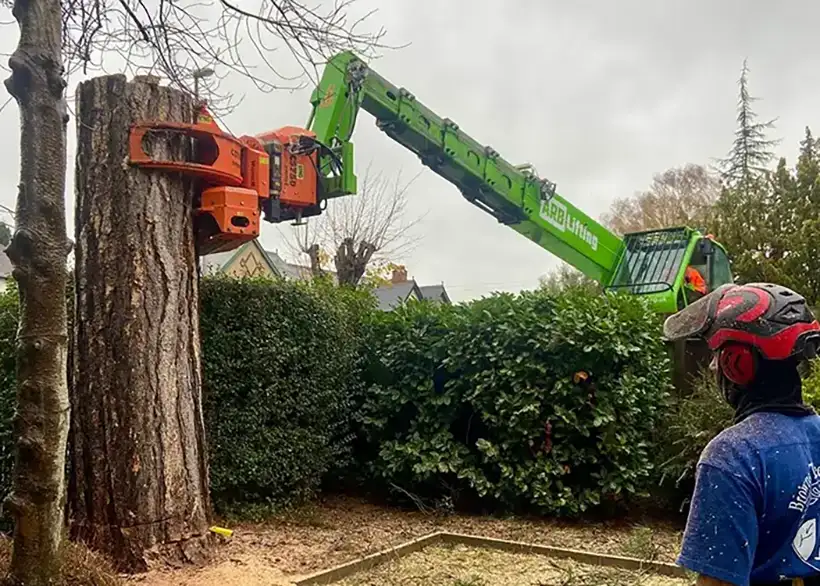
Emergency tree removal
An “emergency” is not just “I want it gone quickly”. It’s when there is an immediate safety risk or a high likelihood of failure causing harm or major damage.
Examples include:
- A tree or large limb has failed and is blocking access or damaging a building.
- The tree is partially uprooted or has clear root plate movement.
- A storm-damaged tree is hanging over a driveway, footpath, road, or roof.
- Anything involving overhead power lines or damaged electrical equipment.
What to do first, keep it simple:
- Keep people and pets away, cordon off the area if you can.
- Do not touch fallen wires or anything tangled in them.
- If you suspect electrical danger or damage to power lines, call 105, it routes you to the local electricity network operator and is free.
- If there’s immediate danger to life, treat it as an emergency and call the appropriate emergency service.
Safety note from me: tree removal is hazardous work. It should be undertaken by competent, insured professionals with the right equipment and planning.
How professional tree removal works
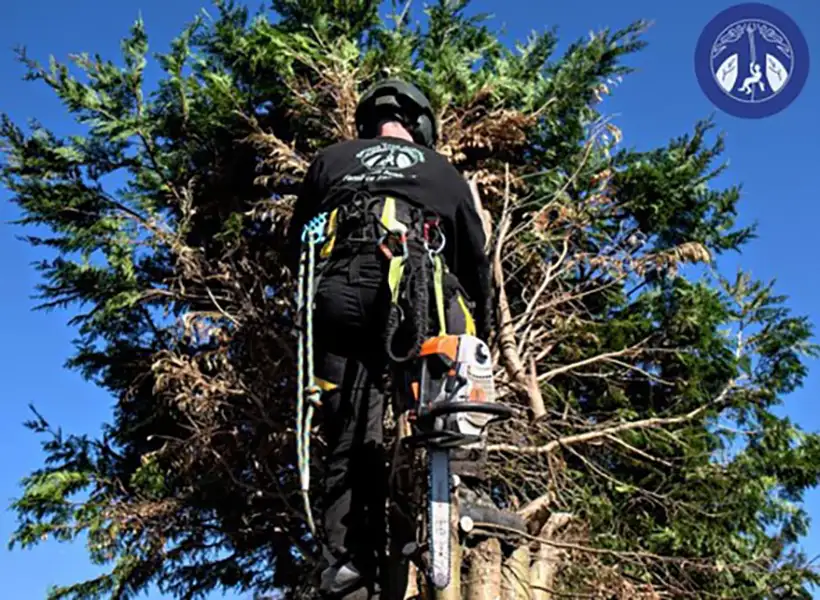
When I price a job, I’m pricing the plan, not just the cutting. A competent professional process typically includes:
- Assessment on site: tree condition, defects, lean, targets (house, cars, greenhouse, neighbours), and access.
- Restrictions checks: whether the tree may be protected by a Tree Preservation Order (TPO) or in a conservation area, and what permissions or notice may be needed.
- Access planning: where the team and equipment will go, what gets protected, and how waste will be moved.
- Safety controls: exclusion zones, traffic or pedestrian management if needed, and a method that matches the risk.
- Sectional dismantling vs felling: if there’s room and it’s safe, felling may be possible, if not, the tree is often removed in sections to control movement and avoid damage.
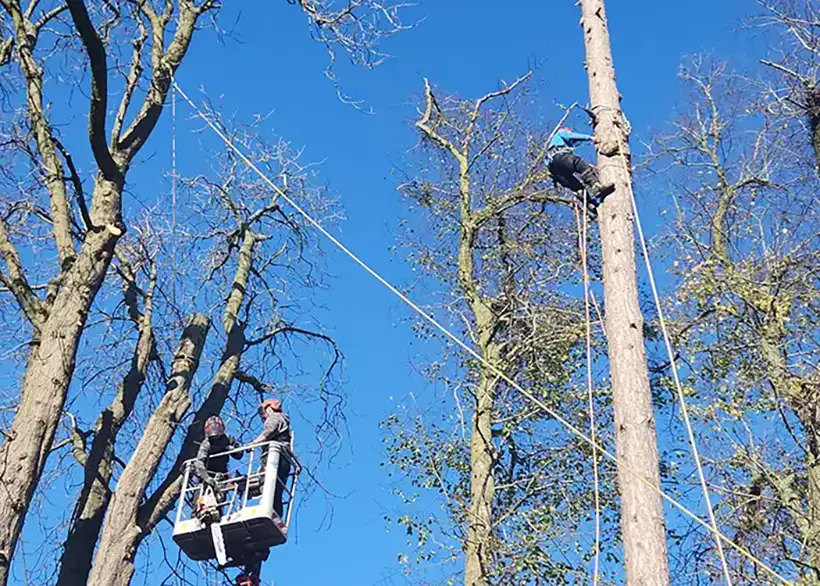
- Rigging and control: used when limbs must be lowered carefully because of nearby property or obstacles.
- Clean-up: removal or processing of brash and timber, and leaving the site tidy as agreed.
- Optional stump work: stump grinding or treatment depending on your plans for replanting or landscaping.
What tree removal costs in the UK, and why it varies
Let’s be straight, there is no single “tree removal cost”. A tree removal quote is a risk and logistics quote.
Indicative UK ranges published by trade quote and cost guide sites often look like this:
- Small trees can start in the low hundreds.
- Medium trees commonly run into several hundreds to over £1,000.
- Large or complex removals can be £2,000+, and in some situations higher where access, cranes, or traffic management are involved.
Those figures are indicative, not a promise. Local pricing across Buckinghamshire, Hertfordshire, Bedfordshire, Northamptonshire and Oxfordshire will vary by contractor and job complexity.
The main cost drivers are:
- Size and species, and how the canopy behaves when dismantled.
- Access and handling, for example narrow side access, steps, soft lawns, or long carry distances.
- Obstacles and targets, conservatories, sheds, fences, parked cars, neighbouring property.
- Sectional dismantling and rigging needs, more control usually means more time and kit.
- Traffic and pedestrian management, especially if the tree is near a highway or public footpath.
- Waste volume, and whether you want everything removed or retained.
- Stump grinding, if included.
- Emergency call-out or out-of-hours work, particularly after storms.
- Wildlife constraints, where timing or specialist input may be needed.
- Permits or restrictions, where notice or consent applies.
- Cranes or specialist access, occasionally required for extreme constraints.
VAT may apply, and reputable quotes should be site-specific.
Cheapest isn’t best, how to compare quotes properly
“Cheapest” is often just “most optimistic”. If the method is wrong or the risks are underestimated, the job either drags on, damages something, or becomes a dispute.
Use this checklist to compare quotes properly:
- Are you qualified for this type of work? [Ask about relevant tickets and competence], not just “we’ve done trees”.
- What insurance do you carry? [Public liability insurance amount], and is it current.
- What exactly is included? Removal of all waste, logs left, woodchip removed, stump included or excluded, reinstatement expectations.
- How will you protect property? Lawns, paving, sheds, fences, neighbouring boundaries.
- What method will you use and why? High-level explanation is enough, you’re looking for confidence and clarity.
- Will you check for restrictions? TPOs and conservation areas, and how that affects timing.
- How do you handle wildlife risks? Nesting birds and potential bat roosts should be considered.
- What’s the timescale? Start date, duration, and what happens if weather changes the plan.
- Can you provide references or local examples? [Local case example].
If a quote is dramatically lower than the others, ask what has been left out.
Time of year, wildlife, and practical scheduling
Time of year affects both practicality and responsibility.
- Ground conditions and access: wet ground can limit vehicle access and increase time protecting lawns and driveways.
- After-storm demand: storms can create a queue for emergency make-safe work, and that can affect scheduling.
- Nesting birds: birds often nest in trees, shrubs and hedges, so checks matter. RSPB advice for gardens is to avoid hedge cutting during the main nesting season, because the chance of nesting is high. UK guidance also stresses avoiding harm to wild birds, their nests and eggs.
- Bats: some trees can have bat roost potential. Where roosts are likely, surveys may be appropriate, and timing can matter.
My approach is straightforward, plan work to reduce risk, check properly, and choose timing that avoids problems rather than creating them.
Recycling and responsible disposal
One of the benefits of professional tree work is what happens after the tree is down.
Depending on your preference and the site, options may include:
- Logs retained for firewood or habitat, where suitable.
- Woodchip used as mulch in borders, paths, or removed from site.
- Habitat piles from brash in quieter corners, if appropriate and you want a nature-friendly solution.
- Authorised disposal where removal is required, particularly if material is contaminated or you want the site cleared completely.
I’ll always agree this up front, so you know what you’re getting, and what your garden will look like at the end of the job.
Get in touch
If you’re in Buckinghamshire, Hertfordshire, Bedfordshire, Northamptonshire or Oxfordshire and you’re considering tree removal, I’m happy to take a look and give you a clear, site-specific quote.
I’ll explain what needs doing, what can wait, what alternatives exist, and what’s driving the cost, so you can make a confident decision. We’re a family business and passionate about what we do, please call us on 01908 773777 with any questions.
FAQ
How much does tree removal cost?
Costs vary widely. Indicative UK ranges published by cost guides run from the low hundreds for small trees, to £2,000+ for large or complex removals, with some situations higher. A site visit is the only reliable way to price it.
Do I need permission (TPO / conservation area), and how do I check?
You may need consent for a TPO tree, and you may need to give notice for works in a conservation area. GOV.UK explains the process, and local councils provide application routes.
What happens to the waste?
Typically timber is cut into manageable pieces, brash is chipped, and you can often choose logs and chip to be left, removed, or a mix, depending on space and preference.
Can you remove a tree in an emergency?
Yes, emergency tree removal or “make safe” work is often possible, especially after storms. If power lines are involved, keep away and call 105 first.
Is stump grinding included?
Not always. Many quotes price removal of the tree separately from stump grinding because it’s different equipment and time. Always check what’s included.
How do I know if a tree is dangerous?
Warning signs can include major cracks, visible decay, sudden lean, lifted soil around the base, dead sections in the crown, or repeated large limb drop. If you’re unsure, treat it as a safety issue and get a professional assessment.
Will the cheapest quote be fine if it’s just a small tree?
Sometimes it is, but the risks don’t disappear, they just change. Access, targets, and waste handling still matter, and insurance and competence are non-negotiable.
Can you work during bird nesting season?
Work may be possible, but checks matter. Wild birds, nests and eggs are protected, and the safest approach is to plan ahead and avoid disturbing active nests.
Sources
- GOV.UK guidance on Tree Preservation Orders and conservation areas.
- Buckinghamshire Council, applying for consent to work on a protected tree.
- National Grid, electricity emergencies, call 105 guidance.
- UK Power Networks safety advice, emergency reporting and 105.
- GOV.UK guidance on wild bird protection, surveys and licences.
- RSPB advice on nesting and avoiding disturbance in garden vegetation.
- GOV.UK bats advice for planning decisions, bats in trees and surveys where roosts are likely.
- Bat Conservation Trust, bats and trees timing and precautions (background reading).
- Indicative UK cost guides for tree removal and tree felling.